

Sheep Farming in India: A 2025 profitable venture.
Sheep farming in India is a traditional and sustainable means of livelihood, which at present provides a threefold return in terms of meat (mutton), wool, and manure. Also, it’s a very resilient business, which at the same time requires low start-up capital as compared to other livestock, which in turn makes it a very attractive option for small and marginal farmers in 2025.
Guide for Setting Up a Sheep Farm Step-by-Step.
Starting a sheep farm is a task that requires care in planning out also profitability is based on how well it is managed and the strategy you use to get to market.
Develop a Business Plan: Determine the size of your operation (begin with 20 to 50 ewes), the purpose (meat, wool, or dual), and do a very in-depth market analysis to see what the demand and price are like in your local area.
Select the Right Breed: Select breeds that best suit your climate and use.
Meat: Breeds including Nellore, Mandya, and Mecheri are known high-quality meat production.
Wool/Dual: Marwari, Magra, and Chokla are fine options.
Establish Proper Housing: Sheep do well in open, airy, and clean shelters. We recommend building the shed on high, dry ground with good drainage to avoid foot rot and other diseases. Also,o for every adult sheep, include at least 10 to 15 sq. ft. in total for covered and paddock areas.
Manage Nutrition and Health: Focus on what you do in terms of grazing management and also in dry seasons or late pregnancy, which are critical times, including dry forage (hay, straw) and energy supplements (grains, oil cakes) in the diet. Also, put in place a very strict program of vaccinations and deworming, as parasites present the greatest risk.
Focus on Breeding: Plan for a breeding schedule that coincides with lambing and prime weather conditions and rich fodder, which in turn maximizes lamb survival and growth rates.
Estimated Set-up Cost (Small Scale, 2025)
The small-scale farm, which has 50 ewes and 2 rams as an example, may see great variation in the initial investment based on the which is the area it is in, what the pastures are like there, and the cost of civil works.
Expense Item Approximate Cost (INR) Notes
Initial Stock (50 Ewes 2 Rams) Rs 2.5 lakhs to Rs 3.5 lakhs Per Ewe cost averages Rs 4,500 to Rs 6,000 each.
Shed Construction (Basic Shelter) ₹80,000 ₹1,20,000 Typical thatched oasbestos-roofed shed.
Equipment (Fencing, Feeders, Waterers) of between Rs 40,000 to Rs 60,000, which is a must for farm management and security.
Working Capital (Feed, Meds for 6 months) between ₹50,000and ₹80,00, which covers initial fodder and concentrate purchase, veterinary expenses.
Total Initial Investment INR 4.2 Lakh INR 6.1 Lak, which may be reduced by as much as 50% via government subsidies (for example, as part of the National Livestock Mission).
Background Export to Sheets
Profit Potential in 2025
Sheep farming produces a variety of income.
Meat Sales: Mutton is the mainstay of India, which also reports a high demand. We see that a healthy flock will produce lambs for market in 6 to 10 months, which in turn quickly puts money in your pocket.
Flock Multiplication: Profit sees great growth with the addition of new lambs each year, which in turn allows for fast expansion of the saleable stock.
Wool and Manure: Wool gives us a steadily small, low-income A l, so sheep manure is very much in demand as an organic fertilizer, which in turn presents a great additional non-livestock-based income.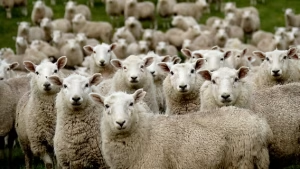
An efficient run of 50 ewes may see an annual profit of between Rs 75,000 to Rs 1,20,000 once the flock reaches full production, which comes into play at the end of the second year. Also,o this is a great return on investment, which we see in particular for farmers who reduce feed costs via rotational grazing and also benefit from government support schemes.
Discover more from
Subscribe to get the latest posts sent to your email.


