

All but one of the world’s top 20 most weakened metropolises last time were in Asia, a new study shows.
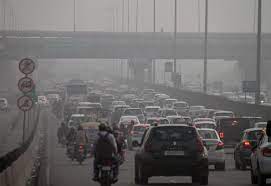
The majority of these metropolises – 13 – are in the world’s most populous country, India, where booming profitable growth is fired largely by coal and where hundreds of millions live in business- congested and clogged megacities.
Another four are in bordering Pakistan, with one in China and Kazakhstan respectively.
The only megacity outside of Asia featured on the list is N’Djamena, the capital of Chad in central Africa – which was named the country with the worst air pollution.
Meanwhile the metropolises with the worst pollution in North America were all in California.
The report by IQAir, a Swiss company that tracks global air quality, looked specifically at fine particulate matter, or PM 2.5, one of the lowest but most dangerous pollutants.
PM 2.5 comes from sources like the combustion of fossil fuels, dust storms and wildfires. It’s so tiny – 1/ 20th of a range of a human hair – that it can travel past your body’s usual defenses into your lungs or bloodstream.
The patches causes irritation and inflammation and have been linked to respiratory problems and habitual order complaint. Exposure can cause cancer, stroke or heart attacks and has been associated with a advanced threat of depression and anxiety.
The World Health Organization( WHO) says average periodic situations of PM 2.5 shouldn’t exceed 5 micrograms per cubic meter.
Byrnihat, an artificial city in northeast India recorded a PM 2.5 attention of 128.2 last time – further than 25 times the WHO’s standard.

“ It feels very sad and helpless that Byrnihat keeps beating the list, ” Suman Momin, 26, who lives in the megacity of around 70,000, told CNN.
She criticized factories around the city and a booming construction industry and trees being felled as contributing to the poisonous air.
“ The pollution is particularly bad right now, visibility isn’t great, there’s dust far and wide, my eyes also burn, ” she said.
“ I don’t leave home without a mask. ”
Twelve other metropolises in the top 20 are in India.
Its capital New Delhi featured as the world’s most polluted capital for the sixth successive time, with a PM 2.5 attention of 91.8. The report also listed six satellite metropolises – Faridabad, Loni, Delhi, Gurugram, Noida and Greater Noida – making the list.

Just last November, a throat-searing blanket of smog settled over Delhi, disrupting flights, blocking buildings from view and prompting the city’s chief minister to declare a “medical emergency.”
Asian and African countries rank as the most weakened in the world
In 2024, the average air quality in Chad was further than 18 times the World Health Organization’s( WHO) PM 2.5 safety guideline of 5.0 µg/ m ³, making it the country with the worst air quality globally. Bangladesh and Pakistan followed nearly before.
But overall, India – the world’s most vibrant nation with 1.4 billion people dropped from third to fifth place from the former time, according to the report.
But the report said air pollution “ remains a significant health burden reducing life expectation by an estimated 5.2 times. ”
India’s neighbors Bangladesh and Pakistan – together home to some 400 million people – were alternate and third-most polluted countries globally in terms of PM 2.5 molecules, according to the report.

China – which used to dominate global rankings of the world’s worst air – noted a small enhancement, the report said.
Its periodic average PM 2.5 attention dropped from 32.5 micrograms per cubic meter to 31, with air quality perfecting in megacities like Beijing, Shanghai, Chengdu, Guangzhou and Shenzhen, the report said.
China is the world’s largest carbon dioxide emitter but in recent times has waged a campaign against air pollution, particularly in the metropolises that have fuelled its profitable growth, and has pushed a massive expansion in solar and wind power.
But last month two clean- energy groups raised alarm over what they said were plans by China’s power assiduity to make nearly 100 gigawatts of new coal factory capacity last time, the most in nearly a decade.
All 20 of the world’s most weakened metropolises last time exceeded WHO PM 2.5 guidelines by over 10 times, the IQ Air report showed.
Data gaps
“ Air pollution remains a critical trouble to both human health and environmental stability, yet vast populations remain ignorant of their exposure situations, ” said Frank Hammes, Global CEO of IQAir.
Iran and Afghanistan didn’t feature in this time’s report due to a lack of data vacuity.
Air quality monitoring in Southeast Asia is also a problem, with nearly all countries having “ significant gaps in government- led enterprise, ” the report set up.
In 2024, 173 out of 392 metropolises in the region demanded government monitoring stations, while Cambodia had none, it said.
Those problems are likely to be aggravated after the US blazoned before this month that it would stop participating air quality data gathered from its delegacies and consulates worldwide due to “ backing constraints ” the Associated Press reported.
“ Air quality data saves lives, ” said Hammes.
“ It creates important demanded mindfulness, informs policy opinions, guiding public health interventions, and empowers communities to take action to reduce air pollution and cover unborn generations. ”
Worst metropolises in North America
Only 17 of 8,954 metropolises analyzed globally by IQAir recorded air quality which met WHO pollution guidelines, the report said.
The metropolises with the worst air pollution in North America were Ontario, Bloomington and Huntington Park – all in California, the report said.
Overall the United States saw a significant reduction in PM 2.5 situations last time, with the periodic average dropping 22 from 2023.
Northern America has long boasted vigorous air quality monitoring systems, contributing 56 of the total number of ground- grounded air quality monitoring stations included in the IQ Air report – helping scientists with their continued exploration on air quality and abetting policymakers to make opinions about public health.
Only 12 countries, regions, and homes recorded PM 2.5 attention below the WHO guidelines, utmost of which were in the Latin America and Caribbean or Oceania region.
The report called on governments to devote backing for renewable energy systems and “ strengthen emigration limits for vehicles and artificial conditioning. ”
Advice Suman wishes authorities in Byrnihat would take to save her megacity from appearing at the top of the most weakened list again coming time.
“ People around have developed breathing issues over the times as well, ” she told CNN.
“ This is my motherland. I’m a original. I don’t want to leave this area. We want the governments to do more, come together and work for us. ”
Discover more from
Subscribe to get the latest posts sent to your email.


